A personal review of the interesting executive resolutions from the January HBR Ideacast.
Thursday, February 1, 2007


Sunday, January 28, 2007
Saturday, January 27, 2007
What's on my iPod
It's not just music. There is tons of executive insight and other knowledge easily available through iTunes.
Sunday, December 17, 2006
Monday, December 11, 2006
Monetizing Data - The Race for Free
Listening to Eric Schmidt, Google’s CEO talking to John Battelle at the Web 2.0 conference, I was struck by his confidence in Google’s ability to *monetize everything*.
It’s not like Google doesn’t have great credibility in the monetization space. Google’s revenues are approaching $10 billion because they figured out how to monetize internet search.
In fact, it’s possible that all Schmidt is talking about is extending the monetization of search. Here’s my hypothesis:
- Potentially all data stored on the internet represents some value to somebody…this is the Longtail – stretching from ‘hits’ to the world’s most obscure niches
- The more data there is, the more difficult it is to find specific data
- The more difficult it is to find, the more important search advertising becomes to increase search visibility
- The more important that search advertising becomes, the more marketers are prepared to pay for it
- The more marketers are prepared to pay it, the richer search marketing networks become
- The richer search advertising networks become the greater the competition to be a search advertising network
- The way to win the search advertising network wars is to become the pre-eminent portal to the internet – the user desktop
- The way to become the user-desktop – sorry Microsoft - is to become the provider – for free – of everything a user needs – from applications like spreadsheets and word processing to hardware and maybe even the networks that users access.
Schmidt asks Battelle an interesting question – “why shouldn’t your cell phone be free?”. It’s interesting, because if the cell phone is free, how is Schmidt assuming that cell phone makers will survive?
My hypothesis, is this: he’s assuming pretty much what already happens today but with a twist. Today phone makers are subsidized by the network providers who in turn are subsidized by network users. In the future, I believe he’s suggesting that phone makers can be subsidized by network providers who are subsidized by network ADVERTISERS – organizations interested in increasing their network visibility through advertising. So, here's a question: if this is true could all network access devices including computers ultimately be free?
Schmidt made another interesting comment when asked why Google purchased YouTube. His answer was simple – “we noticed a sudden breakout in user-generated video and determined that video had become a fundamental data type”….and monetizing fundamental data is exactly what Google is all about.
So what is fundamental data? E-mail? Conversations? Software? Movie listings? Pictures?
I’m thinking yes, yes, yes, yes and way more. If it’s bit and bytable – it’s data – and from Google’s perspective it can be monetized through advertisers.
So what does this mean for – say – software companies or other businesses?
I don’t know. Perhaps Schmidt provides some clues…
Although he’s confident and high on Google’s potential, he’s clear they need to build better partnerships. I’m pretty certain that’s going to make sense for everyone. It will be difficult to be an ‘island’ and still be fundamental. Partnerships extend networks, build larger communities and ultimately increase search visibility.
Schmidt and Battelle also reference the power of Google’s immense and growing user database. Databases make filtering more effective and more efficient. Having good databases will be good thing. They will be valuable. So, I can see software and other companies creating and taking much more advantage – in their product, in their advertising, and in their partnering – of well thought out and carefully mined internal databases.
Finally, I can see a race for free. OK, maybe not free, but with value being created from other sources - data, partnerships and…even on-site advertising revenue – I can see makers of certain products adapting their business models to attract network traffic and visibility, not just product sales. I can see product pricing declining as this happens and as an increasing number of applications become readily accessible to all users, not just geeky open-source users.
What’s intriguing about what Google’s doing is the breadth of it’s target market. Companies like Microsoft make by far the majority of their revenue from large enterprises. They’re the ones who can afford the large ticket prices. By making advertising affordable even to individuals, and reliable networked applications available for nothing – large organizations maybe the last ones to adopt the Google model. But by entrenching so firmly on individual and SMB desktops, its possible that ultimately even large organizations will find themselves ensnared in Google’s ‘net’.
Friday, December 8, 2006
Christmas Letter
A friend who's a serious, big-company CFO, just sent along his version of the x-mas letter. It's more like an 'anti'-Xmas letter. Some exerpts:
"Last year we chose not to do a x-mas 'brag' letter as frankly the year was a bit weak by our standards; however, this year we're feeling much better about ourselves.
Now a brief update on our 'genetic program' and the progress towards world domination...
Jordy (12) has now begun to specialize in specific sports and is focused on playing hockey, school volleyball, club volleyball, school basketball, club basketball...and soccer.
Alex (10) made the Atom A team and is clearly on his way to the NHL. He played some other sports this year but we don't care about them anymore now that we are on our way to the NHL.
Mac (6) has learned that when we go to shake hands with the other team we 'touch' gloves; we do not punch everyone on the other team.
Mac had his tonsils out this spring and still can't sing.
Pam and I spend our weekends touring local sports facilities when we're not quilting, antiquing or just sitting holding hands.
The rental property we own has given us the opportunity to meet an element of society we would would otherwise not interact with. I have taken the opportunity to write them fulfilling letters about such subjects as: paying the rent, not using small caliber hand-guns to shoot my shed, not threaten the neighbours, how to store your garbage and the joys of quiter sex.
Have a great holiday and new year!"
"Last year we chose not to do a x-mas 'brag' letter as frankly the year was a bit weak by our standards; however, this year we're feeling much better about ourselves.
Now a brief update on our 'genetic program' and the progress towards world domination...
Jordy (12) has now begun to specialize in specific sports and is focused on playing hockey, school volleyball, club volleyball, school basketball, club basketball...and soccer.
Alex (10) made the Atom A team and is clearly on his way to the NHL. He played some other sports this year but we don't care about them anymore now that we are on our way to the NHL.
Mac (6) has learned that when we go to shake hands with the other team we 'touch' gloves; we do not punch everyone on the other team.
Mac had his tonsils out this spring and still can't sing.
Pam and I spend our weekends touring local sports facilities when we're not quilting, antiquing or just sitting holding hands.
The rental property we own has given us the opportunity to meet an element of society we would would otherwise not interact with. I have taken the opportunity to write them fulfilling letters about such subjects as: paying the rent, not using small caliber hand-guns to shoot my shed, not threaten the neighbours, how to store your garbage and the joys of quiter sex.
Have a great holiday and new year!"
Thursday, November 23, 2006
Appreciating Tech in Waterloo
I appreciated getting invited to Deloitte's Tech Appreciation dinner last night at 20 King in Kitchener/Waterloo. Waterloo is the home of RIM, Open Text and Bill Gates favourite university - the University of Waterloo. UW has an awesome reputation for maths and computer science. Deloitte are the accounting rock stars of the Waterloo tech space having figured how to stay close to entrepreneurial techies moving out of the unviversity - and how to keep young companies alive through SR&ED tax credits.
The Waterloo tech crowd is - a typical tech crowd - bright and interesting. I was fortunate enough to sit beside an ex-client and good friend Flavio Gomes of Logisense Corporation. Flav is turning Logisense into a serious player in the IP billing space.
Hot off Pubcon last week, I was pretty clear that if there's a threat to the internet as we know it - it's from Google's overwhelming dominance.
Flav disagrees and his perspective makes a lot of sense - the real, and serious threat is from the carriers, and the ISP's - the guys who've layed the road, own the road and control the toll booths - and have stood by to watch Google and others create billions of dollars of value while the highway business has been turned into a commodity. From Flav's perspective the road owners and the tool booth guys aren't going to stand around forever - they're going to claim their share of the action. The technology exists to do it - including categorizing all the different types of traffic, and charging a fee for each. If he's right - and the logic seems compelling - the wild west days of the current internet business boom could be in serious jeopardy - or not, providing you're in the business of helping collect tolls, like Logisense is.
Other interesting conversation was with Tobi Jenkins - banker, VC and wife of Open Text CEO Tom Jenkins. Tobi has gone into property development - setting up a cool spot called TechTown near UW's incubator center. Tech town is high tech offices, day care, banking and a state of the art health club all in one spot. A consumate business person and marketer, Tobi had brochures at hand for anyone and everyone. If I heard her correctly, TechTown is scheduled to open in May 2007. Get your runners ready.
All in all an outstanding evening put on by the Deloitte group in Waterloo for their technology clients.
The Waterloo tech crowd is - a typical tech crowd - bright and interesting. I was fortunate enough to sit beside an ex-client and good friend Flavio Gomes of Logisense Corporation. Flav is turning Logisense into a serious player in the IP billing space.
Hot off Pubcon last week, I was pretty clear that if there's a threat to the internet as we know it - it's from Google's overwhelming dominance.
Flav disagrees and his perspective makes a lot of sense - the real, and serious threat is from the carriers, and the ISP's - the guys who've layed the road, own the road and control the toll booths - and have stood by to watch Google and others create billions of dollars of value while the highway business has been turned into a commodity. From Flav's perspective the road owners and the tool booth guys aren't going to stand around forever - they're going to claim their share of the action. The technology exists to do it - including categorizing all the different types of traffic, and charging a fee for each. If he's right - and the logic seems compelling - the wild west days of the current internet business boom could be in serious jeopardy - or not, providing you're in the business of helping collect tolls, like Logisense is.
Other interesting conversation was with Tobi Jenkins - banker, VC and wife of Open Text CEO Tom Jenkins. Tobi has gone into property development - setting up a cool spot called TechTown near UW's incubator center. Tech town is high tech offices, day care, banking and a state of the art health club all in one spot. A consumate business person and marketer, Tobi had brochures at hand for anyone and everyone. If I heard her correctly, TechTown is scheduled to open in May 2007. Get your runners ready.
All in all an outstanding evening put on by the Deloitte group in Waterloo for their technology clients.
Subscribe to:
Posts (Atom)
Leadership Smeadership
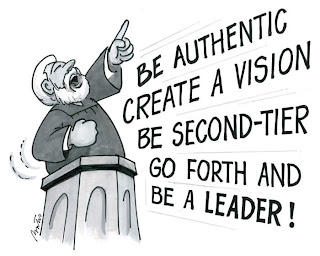
Okay. I know it’s a settings thing. Sometime, a long, long time ago – probably when leadership was being invented – I must have indicat...
-
 In 2012 I've attended two HR conferences. They couldn't have been more different. The 2nd Annual Talent Management Development C...
 -
 Last night I got to have dinner with a group of 20 CIO’s. My role was to help bring the CEO perspective to them on what they do and h...
 -
 Okay. I know it’s a settings thing. Sometime, a long, long time ago – probably when leadership was being invented – I must have indicat...